What Happens During a Professional Brake Inspection at a Local Shop in Chicagoland?
May 4, 2026
When getting ready for the spring season in Chicago, it’s important to know your brakes are ready too.
Between road salt, potholes, freezing temperatures, and sudden stops, Chicagoland brakes take a beating. If you live in Glendale Heights, Hanover Park, St. Charles, Oswego, Roselle, or anywhere across DuPage, Kane, Kendall, or Cook County, you know how fast conditions can change.
Before the first spring storms, it’s smart to know exactly where your braking system stands.
Here’s what really happens during a professional brake inspection at Suburban Tire, and why it’s different from a quick glance at a chain shop.
Step 1: We Start with Your Experience Behind the Wheel
Before we lift your vehicle, we ask a few simple questions.
Have you heard squealing?
Any vibration when braking?
Does the pedal feel softer than usual?
Or is this just a pre-winter check for peace of mind?
Your driving habits matter. A Roselle commuter driving daily on I-290 will experience different wear than a St. Charles parent doing short school runs.
Understanding symptoms helps us inspect smarter.
Step 2: Lifting the Vehicle and Removing the Wheels
A proper Glendale Heights brake inspection means full access.
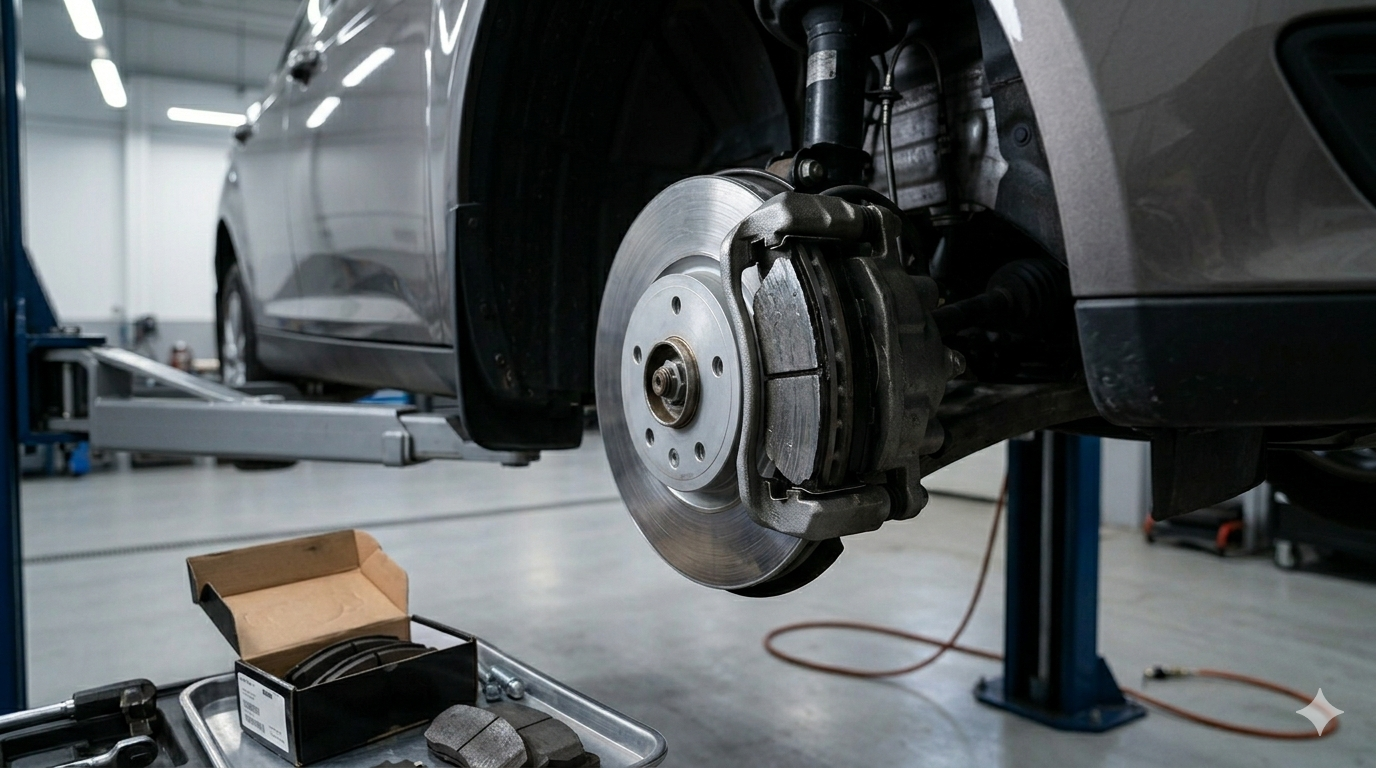
We lift the vehicle safely and remove the wheels. That allows our ASE-certified technicians to see and measure everything, not just what’s visible from the outside.
Here’s what we check:
- Brake pad thickness (measured precisely in millimeters)
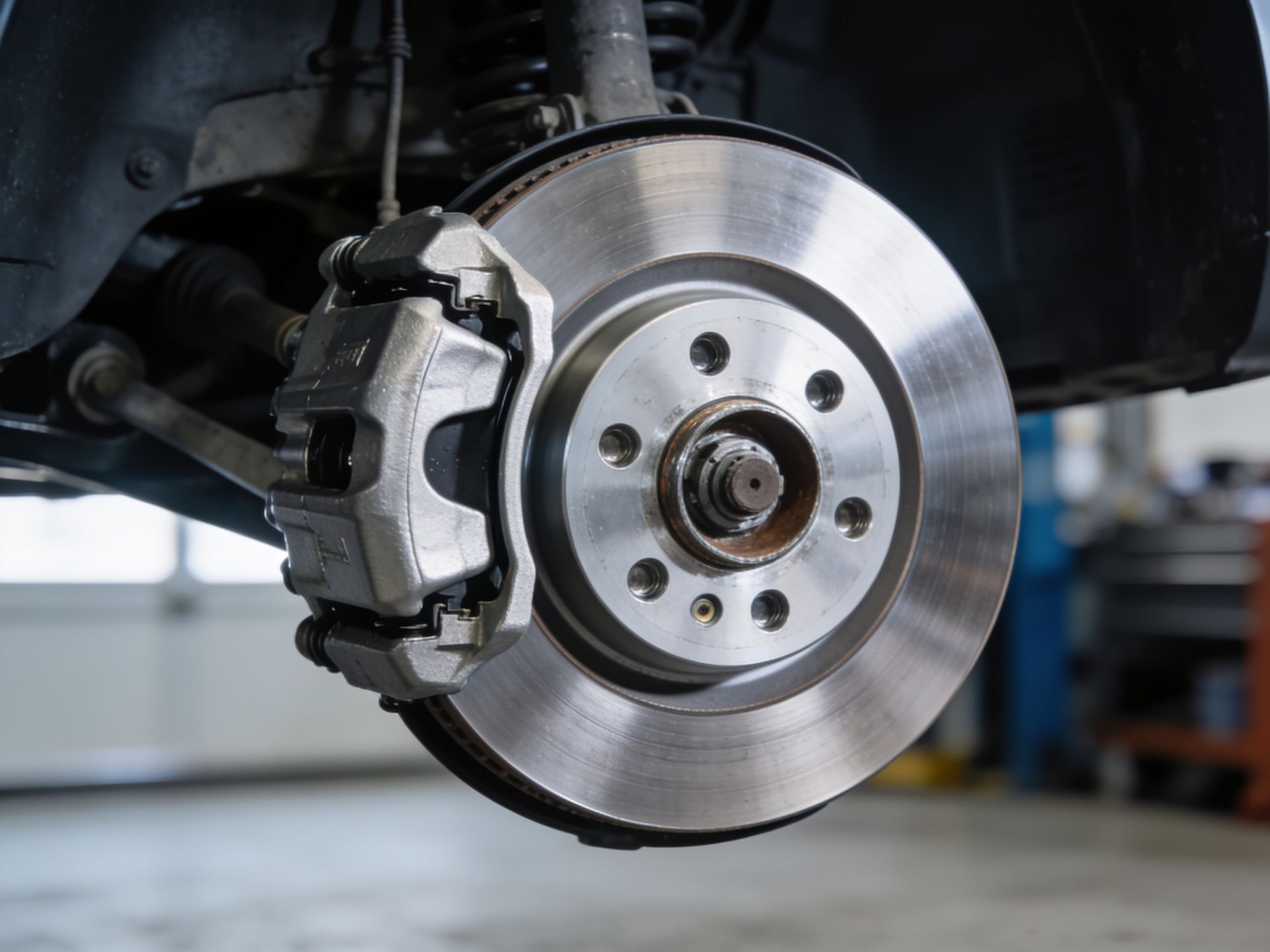
- Rotor thickness and surface condition
- Rotor runout (to detect warping)
- Caliper operation and slide movement
- Brake lines for corrosion or leaks
- Brake hardware (clips, pins, brackets)
- Brake fluid level and condition
A courtesy glance-over doesn’t include measurements. A true DuPage brake check does.
Step 3: Measuring Pad Thickness, Not Guessing
Brake pads don’t fail overnight.
They wear gradually, and the only way to know how much life remains is to measure them.
New pads typically measure around 10-12mm. When they approach 3mm, replacement is generally recommended. Around 4mm, it’s time to plan.
Visual checks can be misleading. Measuring gives you facts.
That’s how you avoid being surprised come spring.
Step 4: Rotor Condition and Runout: Why It Matters
If your steering wheel shakes when slowing down on Route 59 or I-88, rotor issues are often the cause.
We inspect for:
- Scoring or grooves
- Rust buildup from salt exposure
- Heat spots
- Thickness below manufacturer specification
We also measure rotor runout, which reveals subtle warping.
Chicago-area potholes and aggressive braking contribute to rotor stress. Measuring tells us whether the issue is minor or developing into something larger.
Step 5: Brake Fluid: The Hidden Variable
Brake fluid doesn’t get much attention, but it plays a major role in stopping performance.
In Chicagoland, temperature swings cause brake fluid to absorb moisture over time. That lowers its boiling point and reduces performance under heavy braking.
During your Chicagoland brake inspection, we:
- Check fluid level
- Inspect clarity and color
- Recommend service if contamination is present
This step is often skipped in fast inspections. We don’t skip it.
Step 6: Evaluating What Chicago Conditions Do to Brakes
Local driving conditions matter.
Road salt accelerates corrosion on:
- Calipers
- Brake lines
- Hardware
- Rotor surfaces
Potholes can affect alignment and braking feel.
Temperature swings increase moisture buildup.
Last October, a Hanover Park driver scheduled a pre-winter brake check before the first snow. We found a rear caliper beginning to seize from salt corrosion. There were no major symptoms yet, but it was close.
Catching it early prevented uneven wear and a more expensive repair.
That’s the value of proactive inspection.
Step 7: How We Communicate What We Find
When the inspection is complete, we don’t overwhelm you with jargon.
We walk you through it in plain English.
Findings are categorized as:
Fix Now
Safety-related issues that should be addressed promptly.
Monitor
Parts that are wearing but still safe for now.
You’re Good
Components that are functioning properly.
You’ll see measurements. You’ll receive transparent pricing. You’ll understand your options.
No pressure. No upselling. No surprises.
The Difference Between a Real Inspection and a Quick Check
Not all brake checks are equal.
A dealership may follow a corporate checklist. A quick oil-change chain may perform a visual look through the wheel.
At Suburban Tire, we:
- Remove wheels
- Measure components
- Test caliper movement
- Evaluate fluid condition
- Document findings clearly
You get a complete picture, not a guess.
How Long Does a Brake Inspection Take?
Most inspections take about 45 minutes to an hour.
If additional diagnostics are needed, we explain that upfront.
With convenient suburban locations in Glendale Heights, Oswego, St. Charles, Roselle, Hanover Park, and surrounding communities, you won’t need to drive downtown or wait days for an appointment.
We’re open Monday through Saturday, making scheduling simple for busy families.
Why Post-Winter Brake Inspections Matter in Chicagoland
Winter changes everything.
Snow-covered roads demand precise stopping control. Ice increases stopping distance. Salt accelerates corrosion.
A post-winter DuPage brake check gives you:
- Time to plan repairs if needed
- Confidence before the first storm
- Protection against salt-related damage
Knowing now gives you flexibility for safe driving ahead.
Questions to Ask During Your Brake Review
When reviewing your inspection results, consider asking:
- How many millimeters of pad life remain?
- Are the rotors within manufacturer specs?
- Is brake fluid service recommended?
- What happens if I wait until spring?
- Are there corrosion concerns from salt exposure?
Our technicians are happy to explain every detail.
Why a Neighborhood Shop Does It Differently
We’re not a national chain.
We serve families in DuPage, Kane, Kendall, and Cook County every day. Many of our customers return year after year.
That means:
- We remember your vehicle history
- We provide consistent recommendations
- We prioritize long-term trust
When drivers search for a Glendale Heights brake inspection or Chicagoland brake service, they’re often looking for honesty as much as expertise.
That’s what we provide.
When Should You Schedule a Brake Inspection?
Consider booking if:
- It’s been over a year since your last brake check
- You’ve noticed noise or vibration
- You’re heading into spring
- You recently hit a major pothole
- You’re unsure how much pad life remains
A short appointment today can prevent bigger repairs later.
Schedule Your Chicagoland Brake Inspection Today
Before the spring season.
Before temperatures change.
Before corrosion worsens.
Schedule your brake inspection at Suburban Tire today.
Our ASE-certified technicians will measure, inspect, and explain everything clearly. You’ll know exactly what needs attention, and what doesn’t.
With convenient suburban locations and Monday-Saturday availability, it’s easy to find a time that works.
Know where you stand before spring.
Book your Glendale Heights brake inspection, DuPage brake check, or Chicagoland brake service appointment today.
Featured Blogs & News