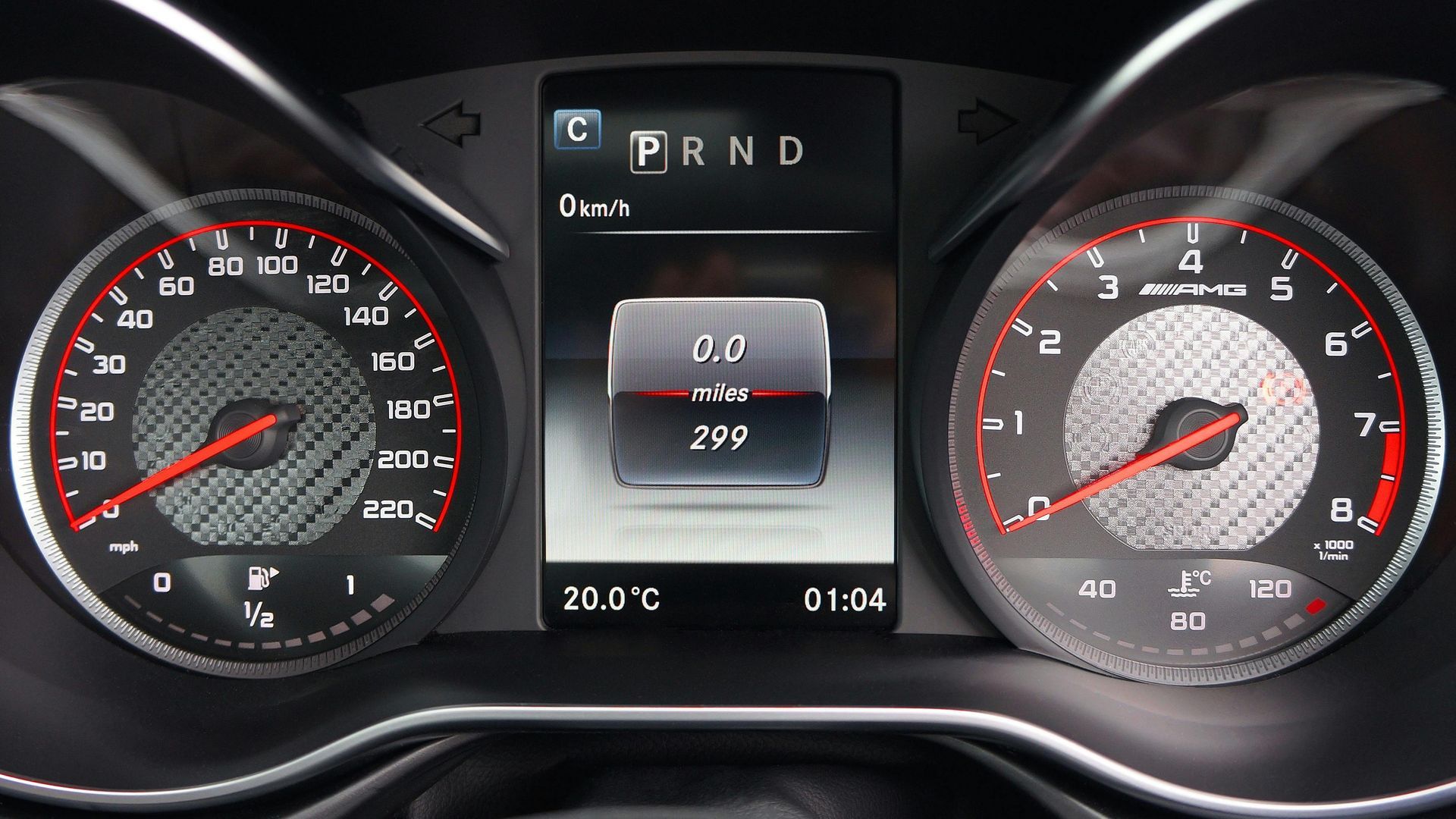
Warning Light Just Came On? Here's What Chicagoland Drivers Should Do First
March 9, 2026
Your check engine light just came on during your commute. Your heart’s racing. What now?
First: you’re not alone. This happens to Chicagoland drivers every day, on I-355, Route 64, Route 34, and in parking lots from Glendale Heights to Oswego. Most warning lights aren’t instant disasters. But some are. The key is what you do in the next minute.
This guide walks you through exactly what to do right now, how to tell if it’s safe to keep driving, and when to come straight to Suburban Tire for same-day diagnostics, no appointment needed.
First 60 seconds after a warning light appears
Do this in order. Don’t skip steps.
- Look at the light and its color.
- Red usually means “stop driving soon.”
- Yellow/orange usually means “drive carefully and get it checked.”
- Check if it’s flashing or steady.
- Flashing = urgent.
- Steady = caution.
- Notice how the car feels.
Ask yourself:
- Is it driving normally?
- Any shaking or loss of power?
- Any loud knocking, grinding, or hissing?
- Any smoke or strong smells?
- Make the safety call.
- Red or flashing light, or the car feels “wrong” → prepare to pull over safely.
- Yellow/orange steady light and the car feels normal → keep driving gently to a safe place or a shop.
That’s it. Four steps. Calm, fast, and safe.
The critical difference between steady and flashing lights
This is one of the biggest “can I drive it?” clues.
Flashing lights mean something active is happening right now.
Example: a flashing check engine light often points to an engine misfire. Continuing to drive hard can quickly damage expensive components.
Steady lights mean your car is warning you early.
You usually have time to drive in carefully for diagnostics.
Quick rule:
- Flashing → slow down, avoid hard acceleration, pull over when safe.
- Steady → drive gently and get checked the same day.
Red lights vs. yellow lights: understanding urgency
Red warning lights = treat as serious
Common red lights include:
- Oil pressure
- Engine temperature / overheating
- Brake system warning
- Battery/charging system warning
- Airbag/SRS warning
If a red light appears, don’t keep cruising suburban highways hoping it disappears. Get somewhere safe and stop driving.
Yellow/orange warning lights = don’t ignore
Common yellow/orange lights include:
- Check engine (steady)
- ABS
- Tire pressure (TPMS)
- Traction control
- Maintenance reminders
You can often drive a short distance, but you shouldn’t wait days. Small issues turn into big repairs fast.
Safe pullover procedures around Chicagoland suburbs
If you’re on a busy suburban route like I-355, I-290, Route 53, Route 64, or Route 34, pulling over safely matters more than the car.
Do this:
- Signal early.
- Move to the right shoulder or take the nearest exit.
- Avoid stopping on curves, bridges, or narrow shoulders.
- Turn on hazard lights immediately.
- If the car is overheating, smoking, or losing power, shut it off.
If you’re near a retail area, school zone, or stop-and-go traffic, it’s often safer to coast into:
- a wide parking lot
- a gas station
- a side street with space
Don’t stop in a narrow lane or busy school pickup line if you can avoid it.
What to check yourself before calling for help
You don’t need to be a mechanic to do a quick, safe scan.
Check these first:
- Gas cap: If the check engine light is steady and you just fueled up, tighten the cap until it clicks.
- Visible leaks: After parking, look for fresh puddles under the car.
- Obvious tire issues: If TPMS is on, look for a visibly low tire.
- Smoke or strong smells: If you see smoke or smell gas/burning, stop driving.
If anything looks unsafe or confusing, skip DIY checks and call a professional.
How to safely check basic items
Only check these if the car is safely parked and the engine is off.
- Oil level
- Pull dipstick, wipe, reinsert, check level.
- Low oil + oil light = do not drive.
- Coolant level
- Only check when the engine is cool.
- Never open a hot cap.
- Tire pressure
- If you have a gauge, check each tire.
- Cold weather drops pressure fast in DuPage and Kane County winters.
Safety note: if you’re on the shoulder of a highway, don’t pop the hood there. Get off the road first.
When to keep driving vs. when to pull over immediately
It’s usually OK to keep driving briefly if:
- The light is yellow/orange
- It is steady, not flashing
- The car feels normal
- No smoke, no loud knocking, no burning smell
Drive gently. Avoid hard acceleration. Head to a shop the same day.
Pull over immediately if:
- The light is red
- The light is flashing
- The engine temperature is rising
- You see smoke or steam
- Brakes feel weak or strange
- The car shakes, grinds, stalls, or loses power
In those cases, continuing to drive can turn a manageable fix into a major repair.
What information to gather before calling a shop
This helps us diagnose faster and more accurately.
Write down:
- Light color (red or yellow)
- Flashing or steady
- The icon or wording
- Any sounds (knocking, squealing, grinding)
- Any change in driving (rough idle, power loss)
- When it started (after fueling? after a pothole? during heavy traffic?)
- Weather conditions (extreme cold, heatwave, heavy rain)
Even a quick phone note helps a lot.
What to tell a technician when you call
Use this simple script:
“Hi, I’m in [Glendale Heights / Hanover Park / St. Charles / Oswego / Roselle / nearby]. My [warning light] came on. It’s [red/yellow] and [flashing/steady]. The car is [driving normally / shaking / losing power]. I noticed [any sounds/smells/leaks]. Can I stop by for diagnostics today?”
Short, clear, and it gives us what we need to help you right away.
Why professional diagnosis beats Google or chain-store scans
Dashboard lights are broad warnings. One light can represent dozens of possible causes.
Googling it usually gives:
- worst-case scenarios
- random guesses
- advice that may not match your exact vehicle
And quick chain-store code readers can pull a basic code, but they don’t verify what’s actually failing.
At Suburban Tire, our diagnostic equipment goes deeper, and our ASE-certified technicians confirm the real cause before you pay for repairs. That means fewer surprises and no wasted parts.
Cost expectations: diagnostics vs. ignoring the problem
Most people hesitate because they fear the bill.
Reality:
- Diagnostics are usually far cheaper than guessing.
- And far cheaper than driving until something breaks.
A diagnostic scan typically costs a fraction of what a major repair does. Ignoring the light is what leads to:
- towing
- lost work time
- bigger damage
- higher bills
You’re paying for clarity, not a scare tactic.
What happens during an emergency diagnostic visit to Suburban Tire
If you walk in with a warning light on, here’s what we do.
- Listen to what happened.
Your notes matter. - Scan your vehicle with professional diagnostic tools.
Not just a quick code pull. - Verify the root cause.
We don’t guess and we don’t replace parts “just to try.” - Explain it in plain English.
You’ll understand what’s wrong and what it means. - Tell you what’s urgent vs. what can wait.
Honest priorities, transparent prices.
And you don’t need an appointment. If your light is on, just stop by Monday through Saturday and we’ll get you answers.
Towing considerations: when you need a tow
You need a tow if:
- The warning light is red or flashing and the car feels unsafe
- The engine is overheating
- The car stalls or won’t accelerate
- You see heavy smoke or fluid dumping
- Brakes feel unreliable
If you’re unsure, call us. We’ll help you decide whether it’s safe to drive in or better to tow.
Real scenarios from Chicagoland suburban drivers
We see these every week.
“My light came on in stop-and-go on I-355.”
Traffic heat, rough idling, and short trips can trigger misfires or sensor faults. We scan it and tell you what’s real.
“TPMS popped up during the first cold snap.”
Chicago-area cold drops tire pressure fast. Sometimes it’s just air. Sometimes it’s a slow leak worth catching early.
“Check engine right after filling up in Roselle.”
Loose gas caps happen constantly. If tightening doesn’t clear it quickly, we’ll diagnose the real issue.
“The car started shaking on Route 64.”
That’s a pull-over-soon situation. We’ll pinpoint whether it’s ignition, fuel, or something else.
No judgment. We’ve seen everything.
Seasonal Chicagoland considerations
Winter
Polar-vortex cold can trigger:
- battery/charging warnings
- TPMS lights
- traction/ABS lights
Cold also thickens fluids and stresses older components. Don’t assume winter lights are “normal.” Get them checked.
Summer
Heatwaves and humidity can trigger:
- overheating warnings
- coolant issues
- AC-related faults
- sensor failures in heavy traffic
If a light appears in extreme heat, treat it seriously.
After-hours and Sunday warning lights
Lights always pick the worst time.
If it happens after hours or on Sunday:
- Follow the safety steps above first.
- If the car feels safe to drive, plan to come in first thing Monday.
- If it doesn’t feel safe, don’t drive it. Arrange a tow.
We’re ready to help Monday through Saturday, with walk-in diagnostics available.
Your next step: make Suburban Tire your first call
When a warning light comes on, panic makes people do one of three things:
- ignore it
- guess at fixes
- head downtown and overpay
You don’t need any of those options.
Suburban Tire is Chicagoland’s calm, local answer, with convenient suburban locations in Glendale Heights, Hanover Park, St. Charles, Oswego, and Roselle.
No appointment needed for diagnostics.
ASE-certified techs.
Clear explanations.
Honest urgency.
Transparent pricing.
If that light is on right now, call us or stop by today.
We’ll figure it out together.
Featured Blogs & News